Hire the physicians you keep paying locums to cover.
Hospital ATS is recruiting software for hospitals. Your recruiters, department directors, finance team and credentialing staff work from one list of open positions, from the first request to the provider’s first day.

Watch it work
Half a minute each, from three seats at the same sample hospital. No sound needed.
One place for everyone who helps fill a position
Each person sees what they need: recruiters work candidates, finance sees cost, directors see their department, and credentialing sees what’s outstanding.
Recruiters
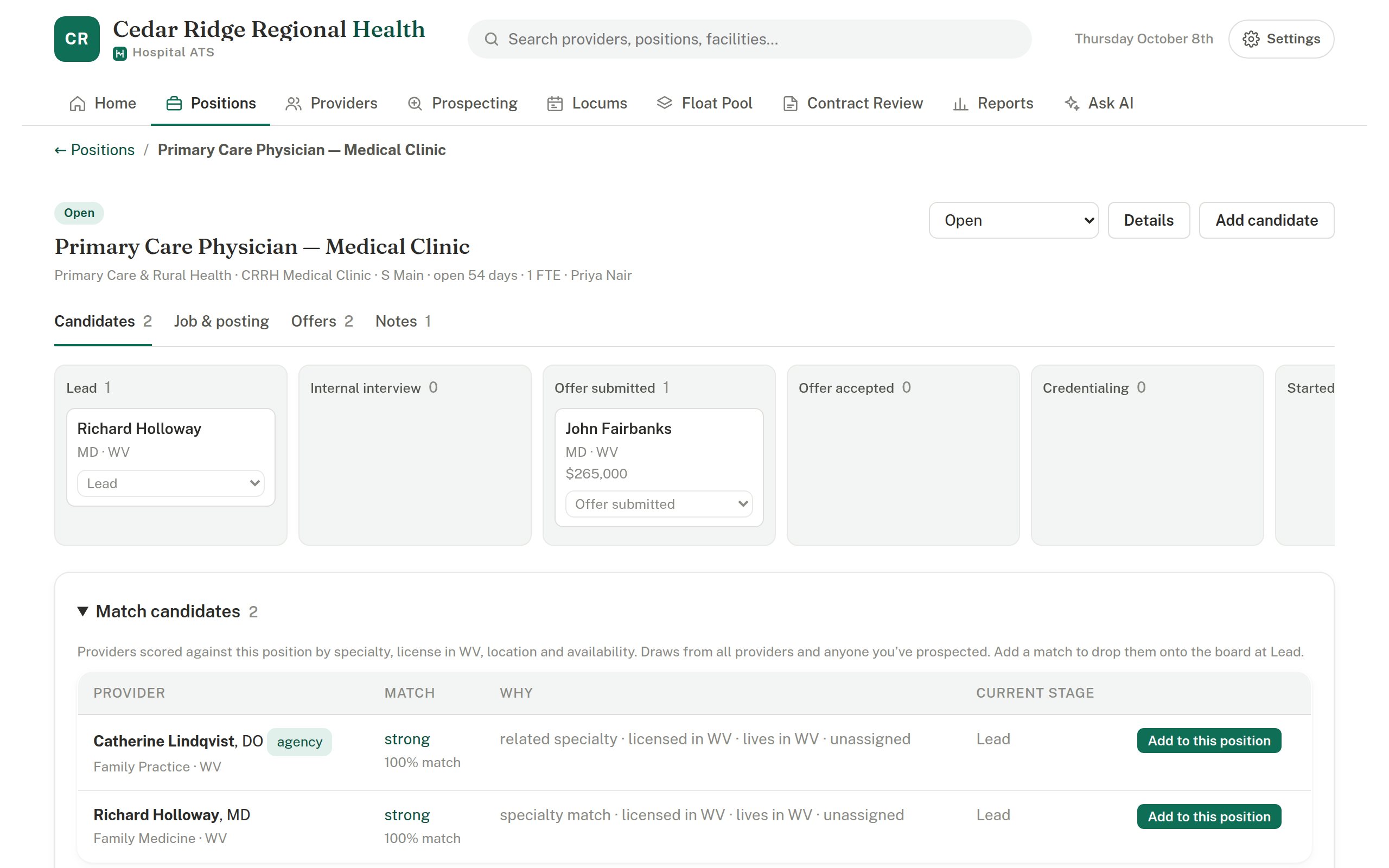
Work every position from one board
- Move candidates from first contact to start date on each position’s board.
- Read a resume/CV into a provider record in seconds, and find providers in the national NPI registry.
- Publish jobs to your own careers page and get an email when someone applies.
- Build a job description from your practice details: volume, call, EMR, trauma level.
Finance
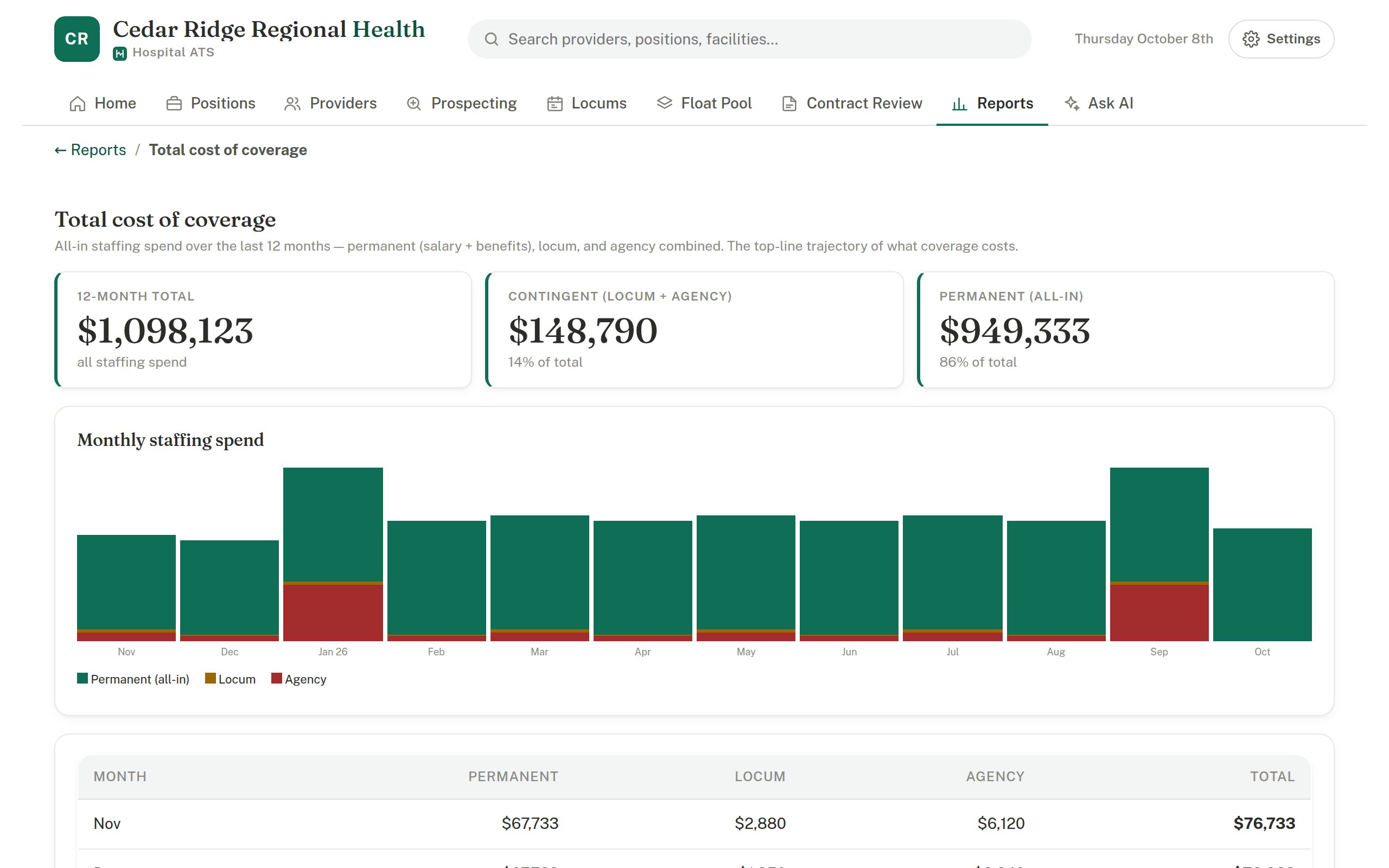
See what coverage really costs
- Total cost of coverage each month: permanent, locum and agency side by side.
- Locum and agency spend by department, with the premium you pay over employed rates.
- Locums-to-perm: departments where agency coverage has become a standing seat, with the savings from hiring.
- Cost per hire and time to fill for every position.
Department directors and medical staff leaders
Request, approve and track positions
- Submit a position request with the details recruiters need, and route it through your approval chain.
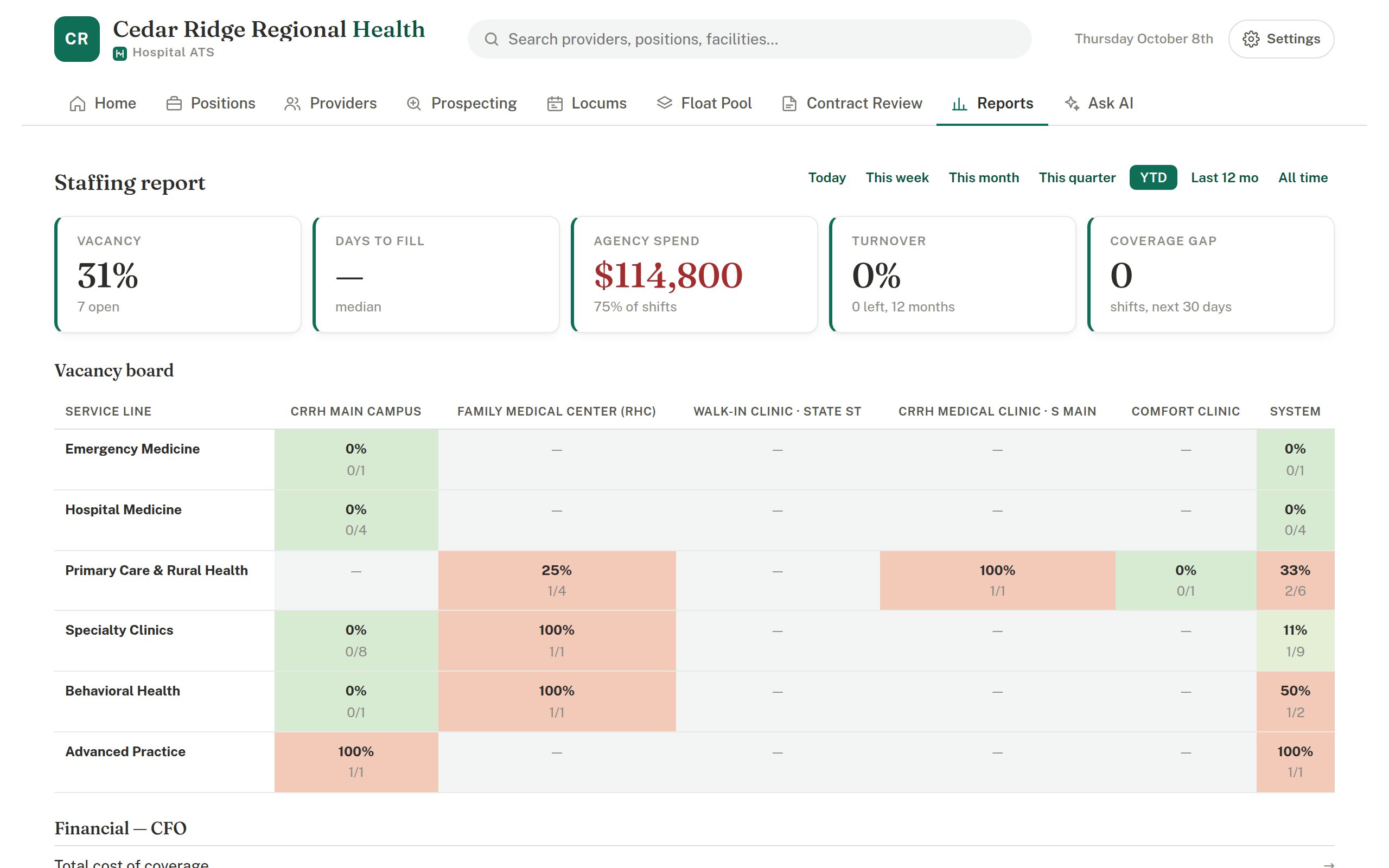
- See vacancy by department and location, and how long each opening has been open.
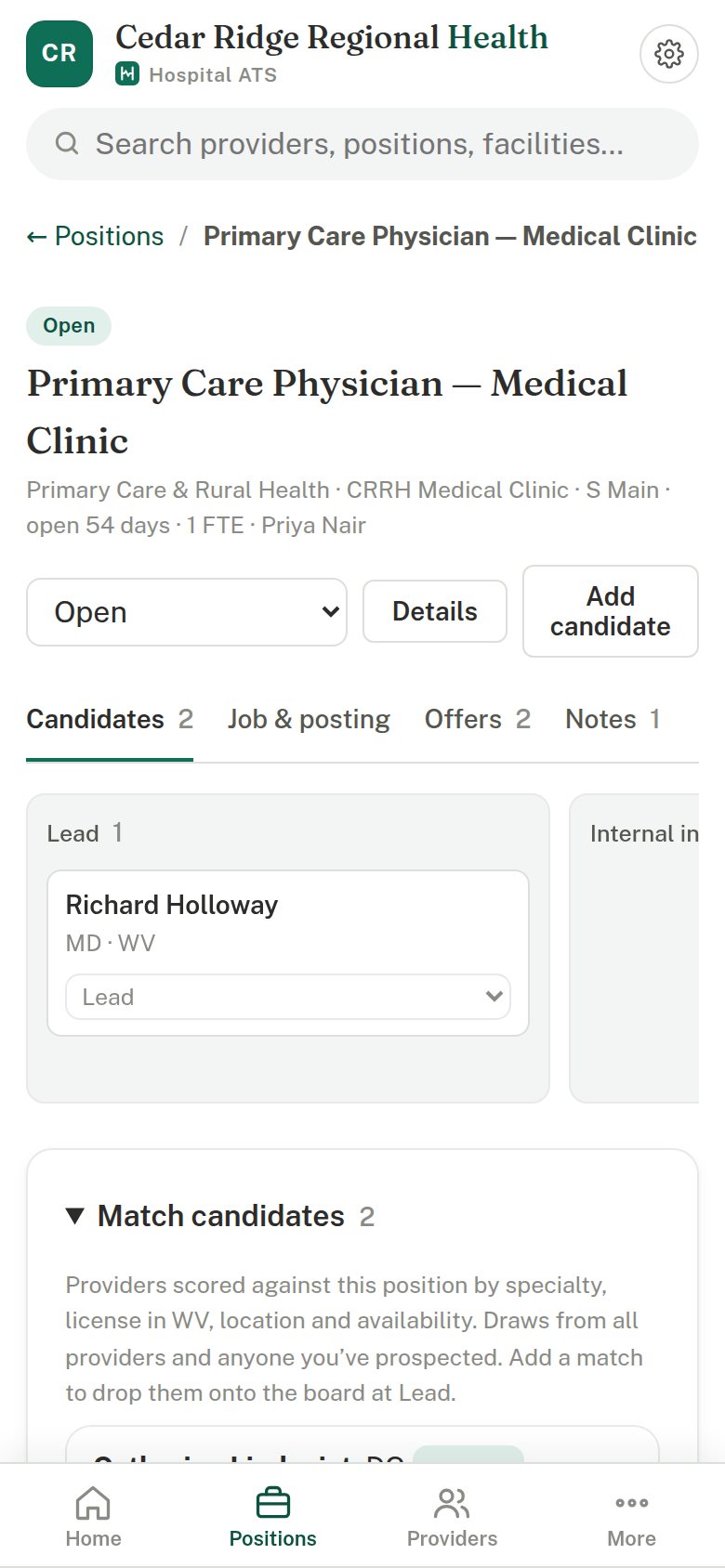
- Approve requests and move candidates from a phone.
Credentialing
Know what’s outstanding before the start date
- A credentialing checklist for each provider and each facility, with expiration dates that turn red on their own.
- Background check summaries with sources, for a credentialer to review.
- The file locks once a provider is hired, and only a System Admin can unlock it.
- Status and dates only: credentialing documents stay in your own systems.
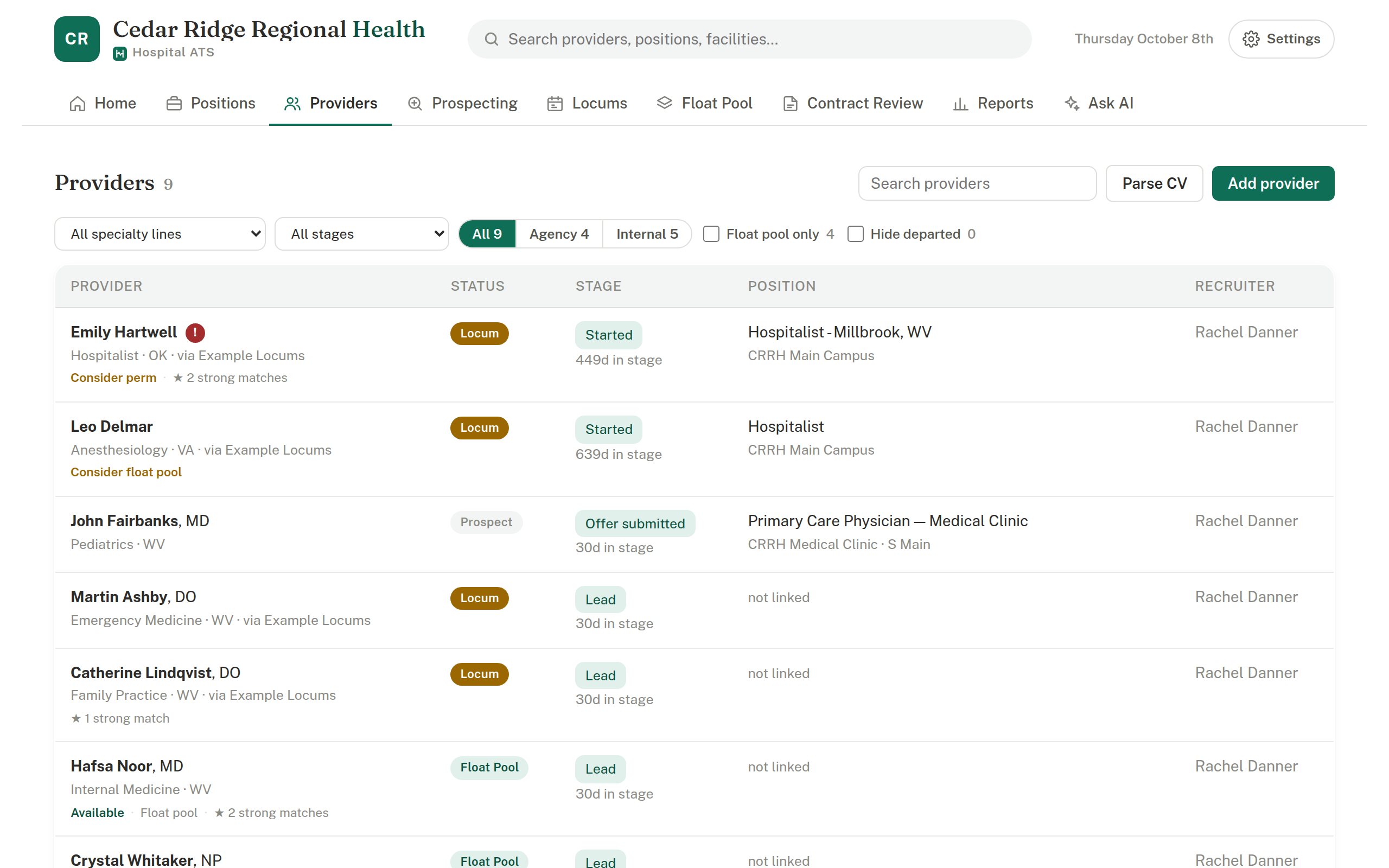
Your jobs on your own careers page, and in Google search
Every hospital gets a careers page that lists its open positions. Each job is marked up so it can appear in Google’s job search, and it comes down on its own when the position is filled.
- Candidates apply with a short form and can attach a resume/CV.
- Applicants land on the position in Hospital ATS, and the recruiter gets an email.
- Spam is filtered before it reaches you.
Getting started
A setup checklist in the app walks your System Admin through it.
- Add your facilities and departmentsWhere your positions are and who they report to.
- Invite your teamRecruiters, directors, finance and credentialing, each with the right access.
- Open a positionAdd the practice details candidates look for, then publish it to your careers page.
- Track it to the start dateCandidates, offers, credentialing and onboarding in one place.
Built to keep your hospital’s data to itself
Hospital ATS holds recruiting records, not patient records. Read how we protect your data.
- Separate by design
- The database itself keeps each hospital’s records apart, not just the screens.
- Two-step sign-in
- Required for System Admins; each hospital can require it for everyone.
- A record of who did what
- An activity log shows who viewed or changed provider records.
- Less to protect
- No credentialing documents and no visa details are stored.
Pricing
One monthly fee for your hospital, with AI actions included each month. Add more AI actions when you need them, and turn any AI feature off.